
A panel from the National Oceanic and Atmospheric Administration (NOAA) and the University of Hawai’i, United States, will present “Weaving Knowledge Systems and Nurturing the Next Generation to Care for Papahānaumokuākea Marine National Monument” at The 8th IAFOR International Conference on Education in Hawaii (IICE2023) and The 3rd IAFOR International Conference on Arts & Humanities in Hawaii (IICAH2023).
To participate in IICE/IICAH2023 as an audience member, please register for the conference.
This plenary will also be available for IAFOR Members to view online. To find out more, please visit the IAFOR Membership page.
Abstract
Weaving Knowledge Systems and Nurturing the Next Generation to Care for Papahānaumokuākea Marine National Monument
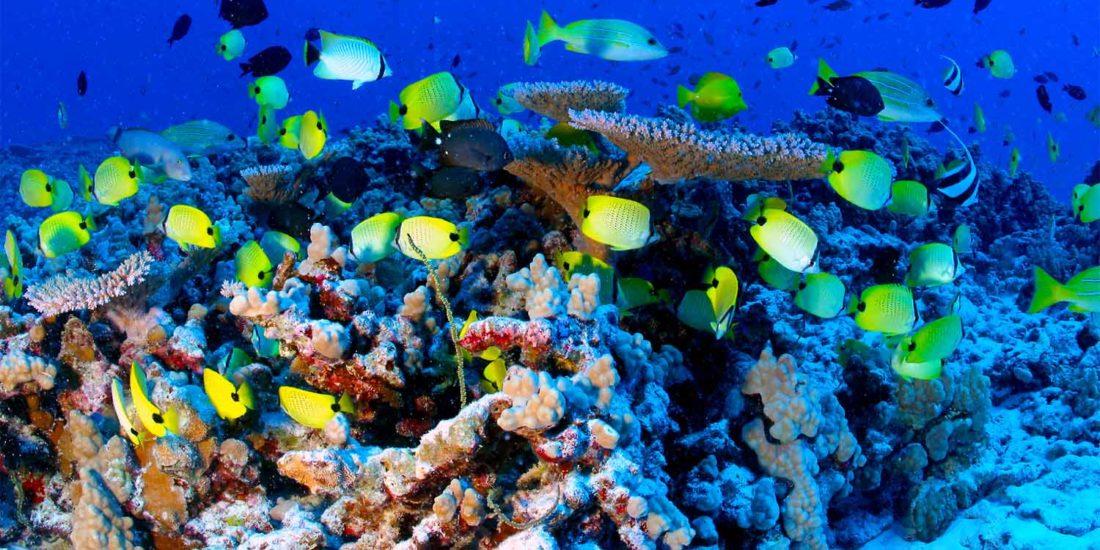
We will highlight the diverse ways in which Kānaka ʻŌiwi (Native Hawaiian) are active in weaving ancestral knowledge systems, values, practices into multi-disciplinary research and indigenous science. These collective efforts will highlight how these ʻŌiwi and the Papahānaumokuākea Native Hawaiian Cultural Working Group are integral to protecting Papahānaumokuākea where there is no division between natural and cultural resources. These efforts are part of more than two decades of ʻŌiwi leaders and communities building pilina and kuleana to care for Papahānaumokuākea as an extension of the communities we call home.
Biographies
Pelika Andrade
Na Maka Onaona & University of Hawaiʻi, United States
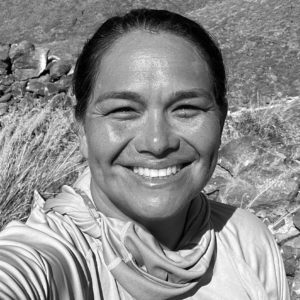 A native Hawaiian born and raised on the island of Kauaʻi, Pelika Andrade works with Na Maka Onaona, a Hawaii-based non-profit, and the University of Hawaii Sea Grant College program. She has a long history of working with Hawaiian communities throughout the archipelago as a community member, sailor, voyager, cultural practitioner and researcher.
For the past twelve years, she has been developing alternate approaches to monitoring Hawaiʻi’s watersheds and has been supporting the implementation of a management strategy that supports healthy balanced communities in Hawai‘i. She is an ongoing participant in the Papahānaumokuākea Cultural Working Group and has served as chair from 2011-2014 and interim chair 2021-present. Pelika has a Master’s degree in Hawaiian studies with a focus on Malama Aina (Hawaiian Conservation) and has visited the remote Northwestern Hawaiian Islands many times to conduct scientific and cultural research. "I feel both honoured and privileged to be a contributing part of caring for our islands, our elder siblings, and ensuring a healthy-thriving pae'aina (archipelago) for future generations."
Kai Hoshijo
Polynesian Voyaging Society & Maunalua Fishpond Heritage Center, United States
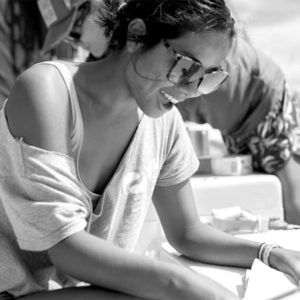 Kai Hoshijo is 25 years old and hails from Niu Valley, Oahu. She recently received her Master’s degree from the University of Hawai’i at Mānoa in Natural Resources and Environmental Management (NREM) and graduated in 2019 with her BSc in NREM. She is a navigation student and volunteer crew member with the Polynesian Voyaging Society and the Maunalua Fishpond Heritage Center. Her recent work titled “O Niu ka inoa: Management lessons based on historical timelines and community stories of a degraded nearshore resource” featured archival research and community interviews to enhance the understanding of Konohiki fishery management in Niu Ahupuaʻa. Kai loves being on the ocean and spending time near it. In her free time, she teaches, makes pottery and loves working in her yard.
Haunani Kane
University of Hawaiʻi, United States
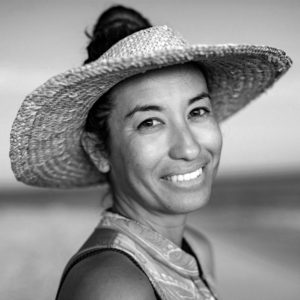 Dr Haunani Hiʻilani Kane is a scientist, surfer, and voyager from Kailua, Oʻahu. An Assistant Professor at the University of Hawaiʻi, Haunani’s life is guided by the values and storied history of her kūpuna (ancestors). Haunani's research combines coastal geomorphology, paleo environmental reconstructions, spatial analysis, and the perspectives of a native islander to investigate how islands, reefs, and island people are impacted by changes in climate.
Haunani has been mentored since her youth in traditional Hawaiian wayfinding and navigation by the Polynesian Voyaging Society. Haunani has spent nearly 200 days at sea aboard both sailing and modern research vessels. As a voyager and climate scientist, Haunani's research and teaching rely upon reestablishing ancestral relationships to place. She hopes that through this process she may provide a more inclusive understanding of the impacts of environmental stressors and ensure that the best available climate science data is reflective of all stories of place and their people. Haunani is currently working with her students and colleagues at the MEGA Lab to better understand how islands in Papahānaumokuākea respond to rising sea levels and storms.
Randy Kosaki
National Oceanic and Atmospheric Administration (NOAA), United States
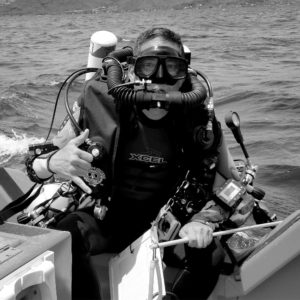 Dr Randy Kosaki is a coral reef fish ecologist with NOAA's Papahānaumokuākea Marine National Monument. Born and raised on O’ahu, Kosaki received his BA in Marine Biology from Occidental College, and his PhD in Zoology from the University of Hawai‘i. Kosaki's research specialisation is in the use of advanced dive technologies, such as closed-circuit rebreathers, to explore the coral reef "twilight zone," or mesophotic (deep) coral reefs between 150 and 330 feet deep. His research is primarily focused on the remote reefs of the Northwestern Hawaiian Islands, but has taken him to numerous localities across the tropical Pacific. In his spare time, Kosaki enjoys reading about fish, looking at fish, photographing fish, catching fish, cooking fish, and eating fish (while watching old Broadway musicals).
Kanoe Morishige
National Oceanic and Atmospheric Administration (NOAA), United States
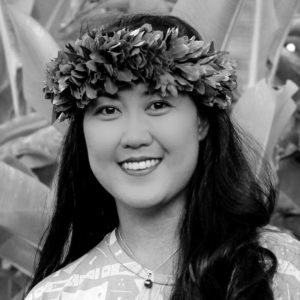 Born and raised in Kapahulu on Oʻahu, Kanoe Morishige is the Native Hawaiian Program Specialist and NOAA Affiliate for Papahānaumokuākea Marine National Monument supporting Native Hawaiian advocacy and engagement across research, policy, and management to guide the co-management of PMNM. For the past fourteen years through her work in the Native Hawaiian non-profit organisation, Nā Maka Onaona, she has been working alongside local communities perpetuating Native Hawaiian knowledge systems, integrating western scientific tools, and building capacity of youth leadership to support ʻāina momona, healthy and productive lands, oceans, and communities.
