

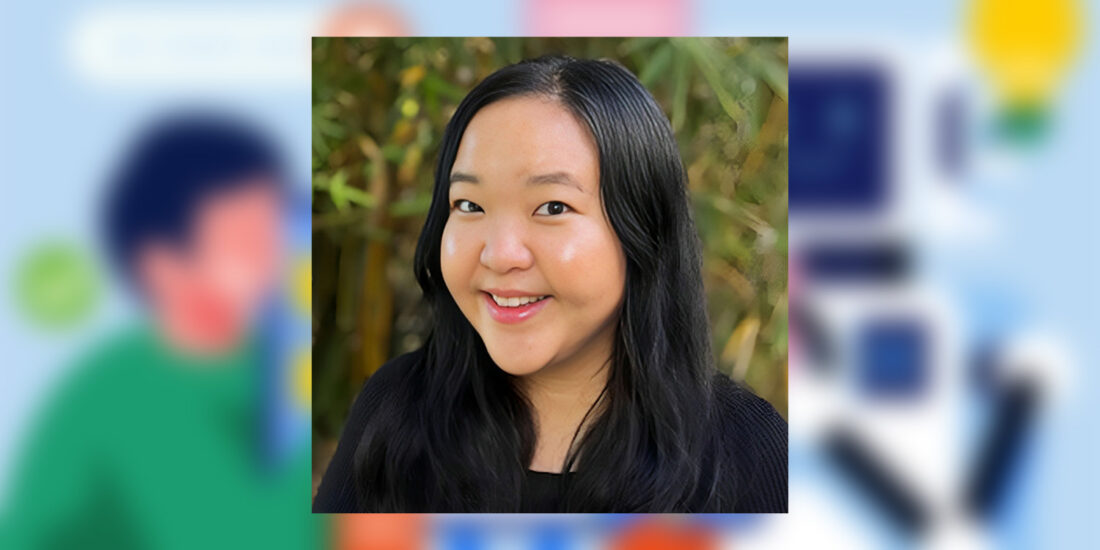
Dr Clare Baek of the University of Hawaiʻi at Mānoa, United States, will present ‘From Large Language Models to AI Agents: What Can We Delegate, and What Should We Decide?’ at The 12th IAFOR International Conference on Education in Hawaii (IICE2027) and The 7th IAFOR International Conference on Arts & Humanities in Hawaii (IICAH2027), to be held at The Hawai’i Convention Center & Ala Moana Hotel in Honolulu, Hawaii, United States, and online.
Dr Clare Baek is an Assistant Professor in Learning Design and Technology at the University of Hawaiʻi at Mānoa, whose research explores the use of generative AI in education. Her workshop will introduce practical applications of AI in teaching and research while examining the importance of human judgement, critical thinking, and ethical decision-making when using these tools.
This keynote presentation will be held onsite in Honolulu. To participate in IICAH2027 as an audience member, please register for the conference via the conference website.
The presentation will also be available for IAFOR Members to view online as part of their membership benefits. To find out more about becoming an IAFOR Member, please visit the IAFOR Membership page.
Speaker Biography
Clare Baek
University of Hawaiʻi at Mānoa, United States
 Dr Clare Baek is an Assistant Professor in the Learning Design and Technology (LTEC) Department at the University of Hawaiʻi at Mānoa, United States. She holds a PhD in Urban Education Policy (Education) from the University of Southern California, United States. Her work focuses on investigating the societal and individual factors that shape students’ use and perceptions of generative AI. She has led discussions on the current and evolving role of AI in education and institutional policy through invited talks and lectures at national and international institutions.
At the University of Hawaiʻi at Mānoa, she teaches a graduate course on AI for Human Learning, where she facilitates discussions on theoretical and practical applications of AI in educational contexts, and serves on the university’s Ad Hoc Faculty Senate committee on AI (CAI). In addition to her work in AI in education, she has expertise in designing computational thinking curricula integrated with community knowledge through partnerships with teachers across school districts. Previously, she worked as a mentor teacher and computer science department chair at a K-12 STEM school serving students with social and emotional disabilities.

From Large Language Models to AI Agents: What Can We Delegate, and What Should We Decide?
As Artificial Intelligence (AI) becomes increasingly present in teaching and research, educators are working to understand what these tools can do and how to make ethical and effective decisions about their use. This hands-on workshop invites participants to explore three approaches to AI: large language models (LLMs), AI workflows, and AI agents. Through brief demonstrations and individual exploration, participants will examine how each approach works and how it could support their own teaching and research.
The workshop will begin with an introduction to the technical concepts behind each approach, followed by examples of how they can be used in practice. Participants will then have opportunities to explore each approach using AI tools and experiment with creating or configuring an AI application. Participants will consider how human decisions about instructions, information, and available tools shape what an AI system does.
Building on these explorations, participants will examine situations in which AI falls short and consider where human reasoning and judgment are needed. Guided activities will encourage participants to examine AI outputs closely, question the assumptions behind them, and consider whose perspectives or needs may be missing.
The goal of this workshop is to support participants in developing informed, reflective, and context-responsive approaches to AI in teaching and research. Participants will leave with practical ideas and resources to explore further. No prior programming experience is required.
